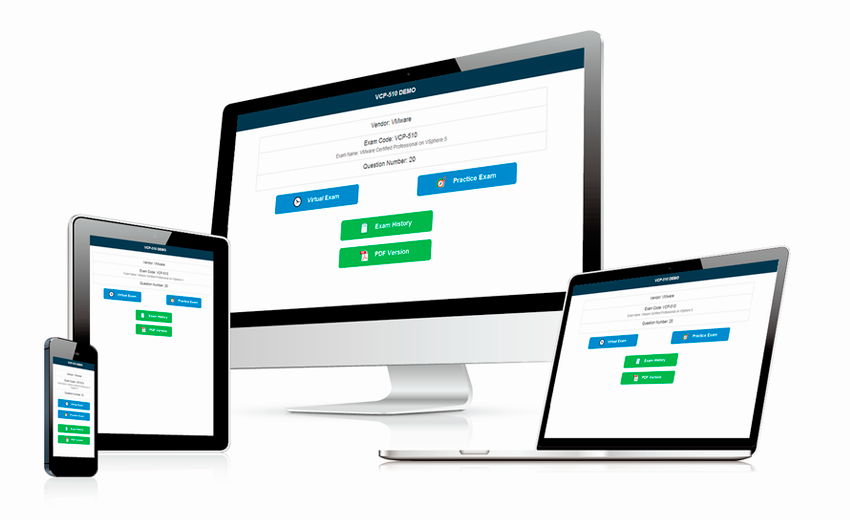
We are an authorized leading company in IT certification filed providing N10-007日本語 actual test & test VCE dumps for CompTIA Network+ Certification Exam (N10-007日本語版). If you get in trouble about N10-007日本語 actual test, congratulations, you find us, we can help you face actual test with full confidence, our test VCE dumps also will help you realize the key knowledge and points so that you will learn N10-007日本語 better and you will be skilled at the practice uses of CompTIA Network+ Certification Exam (N10-007日本語版). Our VCE dumps aim to not only help you pass exam for sure but also help you master an exam subject.
• Based On Real N10-007日本語 Actual Tests
• One-hand Official Stable News Resource
• Regularly Updated with New Test Dumps
• Easy-to-read Layout of VCE Engine
• Well-Prepared by Our Professional Experts
• Printable N10-007日本語 PDF Dumps
• 24 Hour On-line Customer Service Support
• Free N10-007日本語 PDF Demo Download

Instant Download: Our system will send you the CompTIA Network+ Certification Exam (N10-007日本語版) braindumps files you purchase in mailbox in a minute after payment. (If not received within 12 hours, please contact us. Note: don't forget to check your spam.)
How can we help you pass N10-007日本語 actual test effectively? For many IT workers, your jobs are busy and competitive; you have no enough energy to study an exam subject like students in the class, you may more care about actual test score of CompTIA Network+ Certification Exam (N10-007日本語版). Yes, with our N10-007日本語 Test VCE dumps, you will just master the questions & answers of our VCE dumps, it will just takes you 15-30 hours to memorize these and then you can attend N10-007日本語 exam. When you look at the actual test questions, you will find it similar with our dumps and feel it casual. After finishing actual test, you will receive your passing score of CompTIA Network+ Certification Exam (N10-007日本語版). So if your purpose is just to pass exam, our N10-007日本語 Test VCE dumps will help you pass successfully after 15-30 hours' preparation. It is more effective than any other ways.
How can we help you master N10-007日本語 exam subject with our Test VCE dumps for CompTIA Network+ Certification Exam (N10-007日本語版)? Yes, except that our dumps include valid questions & answers materials of actual real test, our N10-007日本語 Test VCE dumps attach a lot of answers explanations details so that you can know why it is, how it can be and the way of thinking. A lot of key knowledge derives from answers explanations. If you have interest in Test VCE dumps for CompTIA Network+ Certification Exam (N10-007日本語版), you can use the internet to delve deeper. With our test dumps you will have a right way to studying so that you will get twofold results with half the effort.
How can we make sure every candidate's money guaranteed and information safety? Yes, we believe we are offering the best value (N10-007日本語 Test VCE dumps) in the market. In most cases, we will have a good cooperation. If you worry about our Test VCE dumps for CompTIA Network+ Certification Exam (N10-007日本語版), if you hope your money guaranteed, Credit Card is the safest and fastest way for international trade business. Normally we advise every candidates pay by Credit Card with credit cards while purchasing our N10-007日本語 Test VCE dumps. Credit Card is the world-wide & frequently used in international trade business, and also is safe for both buyers and sellers. In normal condition, we guarantee you can pass actual test surely with our N10-007日本語 Test VCE dumps. But if you fail the exam please rest assured that we will refund your dumps cost to you soon without any condition. Besides, your information will be strictly confidential with our precise information system.
All in all, it will be a wise thing to choose our Test VCE dumps for CompTIA Network+ Certification Exam (N10-007日本語版). Trust us, we will offer you the best products for your N10-007日本語 actual test and the satisfactory service in one-year service warranty. If you have any questions about CompTIA N10-007日本語 or CompTIA Network+ we will try our best to serve for you.
What Job Roles are Available to People with Network+ Certification?
The Network+ certification is what you need as empowerment to apply for many job roles such as IS consultant, network analyst, computer technician, etc. These are some of the jobs one can apply for once getting the certificate and annual salaries provided by PayScale.com:
- Computer Technician
As a computer technician, you will be in charge of maintaining computer systems and internet connections, running diagnostic tests, troubleshooting errors, and repairing hardware. The average salary one can expect to get in this job is around $41k annually.
- IS Consultant
When you are an information security consultant, you will be charged with the responsibility of routinely conducting IS management reviews. It will also be your duty to ensure that operational processes and technical implementation are aligned while also leading the design, maintenance, implementation, and operation of the security management system. The average salary for an IS consultant is $86k.
- Network Field Engineer
Opting for this job, one should be ready to be tasked with conducting routine time maintenance and equipment checkups. The average salary for professionals in this position is about $44k yearly while the hourly pay is $25.
- Network Analyst
Network analysts are responsible for the installation, layout, and maintenance of different network components as assigned. They are also required to plan, design, and give technical support for data communication networks where necessary. The annual income of such professionals ranges between $45k and $86k.
Having the CompTIA Network+ certification, you can opt for the next core certification to deepen your skills - Security+.
- Help Desk Technician
If this role is your final choice, your responsibilities will include extending technical support to internal IT staff and customers that may face one form of challenge or the other relating to networking, software, or hardware. These professionals are charged with troubleshooting problems reported by the end-users of phones, PCs, and laptops by identifying the issues and fixing them. The salaries of such specialists can be up to $57k per annum.
- Network Administrator
Your job as a Network Administrator includes maintaining networks as relates to computer infrastructure, with a key focus on network interactions, on-site server maintenance, and network resilience/integrity. For this position, there is a salary range between $42k and $83k per year.
Reference: https://certification.comptia.org/certifications/network
CompTIA N10-007: Top Resources
Your level of preparation for the CompTIA N10-007 exam will have an effect on your final performance and score. This is the reason why it is recommended that you spend the right amount of time and use the best resources to study. Luckily, you don’t need to go very far to find the perfect study materials for your certification test because you can find most of them directly on the CompTIA website.
What Domains Should a Candidate Expect Under Network+ N10-007?
The certification exam for Network+ covers a number of topics through which the skills and knowledge of each applicant are tested. These topics are distributed into the subsequent domains:
Network operations (monitoring, managing, and responding to alerts on the performance of networks and availability, providing disaster recovery, using remote access, and defining policies)
Networking concepts (knowledge in the application of switches, routers, and wireless access points, as well as configuring IP addressing, and understanding the use of various protocols and ports)
Network tools and troubleshooting (troubleshooting methodologies, choosing suitable tools, troubleshooting wired and wireless connectivity)
Infrastructure (deployment of cabling solutions, installation and configuring network devices, storage, WAN, and virtualization, among the rest)
Network security (concepts that are critical for the safety of information and overall data storage, including authentication, mitigation techniques, etc.)
CompTIA N10-007 Exam Syllabus Topics:
| Topic | Details |
|---|---|
Networking Concepts - 23% | |
| Explain the purposes and uses of ports and protocols. | 1.Protocols and ports
|
| Explain devices, applications, protocols and services at their appropriate OSI layers. | 1.Layer 1 – Physical 2. Layer 2 – Data link 3. Layer 3 – Network 4.Layer 4 – Transport 5. Layer 5 – Session 6.Layer 6 – Presentation 7.Layer 7 – Application |
| Explain the concepts and characteristics of routing and switching. | 1. Properties of network traffic
7.Port forwarding 8.Access control list 9. Distributed switching 10. Packet-switched vs. circuit switched network 11.Software-defined networking |
| Given a scenario, configure the appropriate IP addressing components. | 1.Private vs. public 2. Loopback and reserved 3.Default gateway 4. Virtual IP 5.Subnet mask 6. Subnetting
|
| Compare and contrast the characteristics of network topologies, types and technologies. | 1. Wired topologies
|
| Given a scenario, implement the appropriate wireless technologies and configurations. | 1.802.11 standards
2. Cellular
5.Channel bandwidth 6.Channel bonding 7.MIMO/MU-MIMO 8.Unidirectional/omnidirectiona 9.Site surveys |
| Summarize cloud concepts and their purposes. | 1.Types of services
4.Security implications/considerations 5. Relationship between local and cloud resources |
| Explain the functions of network services. | 1. DNS service
4.IPAM |
Infrastructure - 18% | |
| Given a scenario, deploy the appropriate cabling solution. | 1.Media types
3. Connector types
|
| Given a scenario, determine the appropriate placement of networking devices on a network and install/configure them. | 1.Firewall 2. Router 3. Switch 4. Hub 5.Bridge 6.Modems 7.Wireless access point 8. Media converter9. Wireless range extender 10.VoIP endpoint |
| Explain the purposes and use cases for advanced networking devices. | 1. Multilayer switch 2.Wireless controller 3. Load balancer4.IDS/IPS 5. Proxy server 6.VPN concentrator 7. AAA/RADIUS server 8.UTM appliance 9.NGFW/Layer 7 firewall 10. VoIP PBX 11.VoIP gateway 12. Content filter |
| Explain the purposes of virtualization and network storage technologies. | 1.Virtual networking components
|
| Compare and contrast WAN technologies. | 1. Service type
|
Network Operations - 17% | |
| Given a scenario, use appropriate documentation and diagrams to manage the network. | 1.Diagram symbols 2. Standard operating procedures/ work instructions 3.Logical vs. physical diagrams 4. Rack diagrams 5. Change management documentation 6. Wiring and port locations 7.IDF/MDF documentation 8.Labeling 9. Network configuration and performance baselines 10.Inventory management |
| Compare and contrast business continuity and disaster recovery concepts. | 1.Availability concepts
4. MTBF 5.SLA requirements |
| Explain common scanning, monitoring and patching processes and summarize their expected outputs. | 1.Processes
2.Event management
|
| Given a scenario, use remote access methods. | 1. VPN
2. RDP
8.Out-of-band management
|
| Identify policies and best practices. | 1.Privileged user agreement 2.Password policy 3.On-boarding/off-boarding procedures 4.Licensing restrictions 5.International export controls 6. Data loss prevention 7.Remote access policies 8.Incident response policies 9.BYOD 10.AUP 11.NDA 12. System life cycle
13.Safety procedures and policies |
Network Security - 20% | |
| Summarize the purposes of physical security devices. | 1. Detection
|
| Explain authentication and access controls. | 1. Authorization, authentication and accounting
|
| Given a scenario, secure a basic wireless network. | 1.WPA 2. WPA2 3.TKIP-RC4 4.CCMP-AES 5.Authentication and authorization
6.Geofencing |
| Summarize common networking attacks. | 1.DoS
3. Insider threat 4. Logic bomb 5.Rogue access point 6. Evil twin 7.War-driving 8. Phishing 9.Ransomware 10.DNS poisoning 11.ARP poisoning 12. Spoofing 13.Deauthentication 14. Brute force 15.VLAN hopping 16. Man-in-the-middle 17.Exploits vs. vulnerabilities |
| Given a scenario, implement network device hardening. | 1.Changing default credentials 2.Avoiding common passwords 3. Upgrading firmware 4.Patching and updates 5.File hashing 6.Disabling unnecessary services 7.Using secure protocols 8.Generating new keys 9.Disabling unused ports
|
| Explain common mitigation techniques and their purposes. | 1. Signature management 2.Device hardening 3.Change native VLAN 4. Switch port protection
7. File integrity monitoring 8.Role separation 9. Restricting access via ACLs 10.Honeypot/honeynet 11.Penetration testing |
Network Troubleshooting and Tools - 22% | |
| Explain the network troubleshooting methodology. | 1. Identify the problem
5. Implement the solution or escalate as necessary 6. Verify full system functionality and, if applicable, implement preventive measures 7. Document findings, actions, and outcomes |
| Given a scenario, use the appropriate tool. | 1. Hardware tools
|
| Given a scenario, troubleshoot common wired connectivity and performance issues. | 1.Attenuation 2.Latency 3. Jitter 4. Crosstalk 5. EMI 6.Open/short 7.Incorrect pin-out 8. Incorrect cable type 9.Bad port 10. Transceiver mismatch 11.TX/RX reverse 12. Duplex/speed mismatch 13.Damaged cables 14.Bent pins 15.Bottlenecks 16. VLAN mismatch 17. Network connection LED status indicators |
| Given a scenario, troubleshoot common wireless connectivity and performance issues. | 1. Reflection 2.Refraction 3.Absorption 4.Latency 5.Jitter 6. Attenuation 7.Incorrect antenna type 8.Interference 9.Incorrect antenna placement 10.Channel overlap 11.Overcapacity 12. Distance limitations 13. Frequency mismatch 14. Wrong SSID 15.Wrong passphrase 16.Security type mismatch 17. Power levels 18. Signal-to-noise ratio |
| Given a scenario, troubleshoot common network service issues. | 1. Names not resolving 2.Incorrect gateway 3.Incorrect netmask 4.Duplicate IP addresses 5.Duplicate MAC addresses 6.Expired IP address 7. Rogue DHCP server 8.Untrusted SSL certificate 9.Incorrect time 10.Exhausted DHCP scope 11.Blocked TCP/UDP ports 12. Incorrect host-based firewall settings 13.Incorrect ACL settings 14.Unresponsive service 15.Hardware failure |